


September 2026
In The Spotlight
Proportionate Oversight in Decentralized Clinical Trials: Four Tools for Sponsors, Investigators, and Local HCPs
Clinical trials with decentralized elements (DCTs) reduce participant burden and broaden access by shifting trial activities to local clinics and homes, often to healthcare providers (HCPs) outside the study team. The investigator’s oversight obligation remains unchanged. ICH E6(R3) requires oversight proportionate to risk, and its Annex 2, on decentralized elements, takes effect January 15, 2027.
The MRCT Center and Medable have released four tools that follow a trial from protocol design to the participant visit, plus a guide to using them together. The tools were developed with input from the Investigator Oversight in DCT Task Force and build on its IRB/EC Considerations for DCT Review.
- Sponsors: Optimizing Decentralized Elements in Clinical Trials (DCTs), for building decentralized elements into the protocol around critical-to-quality factors
- Investigators: Proportional Oversight Framework for Clinical Trials with Decentralized Elements, for matching oversight to risk
- Local HCPs: Clinical Trial Instruction Sheet for Local Healthcare Providers (HCPs), pre-filled by sponsor and site, so the HCP understands their responsibilities
- HCPs with participants: HCP Check-In Questions for Participants, a structured guide for HCPs to use for routine participant visits
Start with How These Four Documents Work Together: A Practical Guide for Sponsors, Investigators, and HCPs.
C3PT Blueprint and Toolkit
Platform trials that test several therapies for rare childhood cancers under one protocol hold great promise. Their progress depends on academic-industry partnerships, which have historically stalled over asset access, regulatory alignment, contracts, and funding. The MRCT Center has released the Childhood Cancer Academic-Industry Collaborative Platform Trials (C3PT) Blueprint, co-developed with Innovative Therapies for Children and Adolescents with Cancer (ITCC), Blood Cancer United, and the Children’s Oncology Group (COG). It pairs a Position Narrative with ten tools developed by clinicians, patient advocates, industry, and regulators from EMA and FDA.
The tools, by topic:
- Define the Trial Purpose Early: Platform Trial Decision Tree, for deciding whether a platform trial is the way to go
- Early Engagement Is Optimal: Best Practices for Regulatory Interactions; PIPs and iPSPs Guidance
- Optimize Operational Infrastructure: Operational Considerations checklist
- Asset Prioritization: Evidence-Based Consolidated Independent Expert Opinion (EBCO) framework, with the Glo-BNHL Industry Information Pack and Asset Submission Form
- Contractual Principles: Likely Pharma–Academic Pain Points and Practical Solutions; Intellectual Property and Data Sharing Contract Principles
- Articulating a Strong Value Proposition: Value Proposition slide deck (PDF)
Start with the Position Narrative or Executive Summary.

New On-Demand Trainings: ICH E6(R3): Essential Records
Good Clinical Practice (GCP) is an international, ethical, scientific, and quality standard for the conduct of clinical trials. Developed by the MRCT Center in collaboration with the ICH E6(R3) Expert Working Group (EWG), the course consists of five modules that introduce and explain the key concepts of the E6(R3) guideline. It is intended for anyone involved in conducting an interventional clinical trial. Courses are free for all registrants.
Module 5 explains ICH E6(R3) expectations for Essential Records across two sub-modules, 5.1 and 5.2. It describes how sponsors and investigators decide which records are essential rather than keeping every record, and how to manage and retain them, including version control, certified copies, multiple repositories, and records shared through sponsor portals. Case studies compare a blinded and an open-label trial and follow a suspected unexpected, serious adverse reaction through a multi-site trial.
View Module 5, Module 1 (Introduction and Foundational Concepts), and Module 4 (Informed Consent) of the MRCT Center’s ICH E6(R3) training. Module 3 (Data Governance) will be available in October, and Module 2 (Responsibilities and Oversight) will follow.
The Clinical Research Glossary: 26 New and Revised Words and Related Content
Twenty-three new and three updated definitions from this summer’s Public Review are now published in the Clinical Research Glossary, bringing it to 239 plain-language definitions.
The glossary defines each clinical research term in one short, plain-language sentence, then adds context: where the word appears in study documents, and what questions are worth asking. Volunteer patients, caregiver advocates, and research professionals write the definitions with the MRCT Center, and public review follows before release. The glossary became a CDISC global standard in 2023 and is the only plain-language standard for clinical research. It is updated yearly and freely available under Creative Commons Attribution 4.0, online or as a PDF or Excel download.
It serves two audiences: patients, participants, and caregivers deciding whether to join a study, and the professionals who write for them.
See how others are using it. The Use Case Collection gathers implementation stories from Pfizer, Bristol Myers Squibb, Biogen, HonorHealth, TriCan Health, CureMito, Mass General Brigham Rally, the Journal of the Society for Clinical Data Management, and a special-interest example focused on the Black Diaspora. They range from health literacy training to patient education portals to terminology alignment in scholarly publishing. If your organization has used the glossary, we would like to hear about it.

MRCT Center 2026 Annual Symposium, October 21 and 22
The MRCT Center Annual Symposium brings together industry, academia, regulators, investigators, patients, and patient advocates to work through the questions shaping clinical research today. This year’s program includes (1) how Operation TrialBlazer moves from a roadmap to practice, (2) what the U.S. can learn from colleagues in the EU and UK who already return results to participants, (3) how to address reciprocal benefits to the communities that host trials when durable access cannot or is unlikely to be achieved, and (4) how health data can be shared across borders as rules change in the United States, Europe, and around the globe.
Wednesday, October 21. Karim Mikhail, Director of the Center for Biologics Evaluation and Research (CBER), U.S. Food and Drug Administration, opens with an update on Operation TrialBlazer. Panels follow:
- Response to the Keynote: Ideation to Implementation and Scale
- Returning Summary Results to Participants: Lessons from the EU and UK relevant to NIH’s draft policy
- Post-Trial Obligations: An Integrated Decision Model for Clinical Trial Placement
- Informed Consent Reimagined: Interactive Demonstration of a Microsoft-enabled Informed Consent application
- MRCT Center Updates: AI and the Administration of Research; Childhood Cancer Academic-Industry Collaborative Platform Trials (C3PT); Proportionate Oversight in Decentralized Clinical Trials; and Trial Regulatory and Clinical Ethics Optimization (TRACE).
Thursday, October 22. A day on data sharing, co-organized with Vivli. Charlie Blanchard, Associate Vice President, Head of Global Privacy and Data Protection at Amgen, will give the keynote address: “Sharing is Caring. So Why is Trusted Sharing Getting Harder? A Privacy Officer’s View from the Intersection of Science, Privacy, and Sovereignty.” Panels will focus on U.S. developments affecting international data sharing, the European Health Data Space, and challenges in deploying electronic health records in U.S. trials.
The event is free. Attend in person in Boston or online from anywhere. An online moderator brings remote attendees’ questions into the room, and sessions will be recorded. Join us for one day or both.
Returning Summary Results to Participants: Lessons from the Research Community
Tuesday, October 27, 11:00 AM – 12:00 PM ET
Some research teams began returning summary-level study results to participants long before the NIH released its draft policy. This Health Literacy Month webinar asks three of them what they did, why, and what they learned in very different settings: community-based clinical studies, a complex platform trial still underway, and a population biobank in Italy designed to run for decades. The panel covers the practicalities of results return, and attendees will leave with concrete lessons they can apply to their own studies, even with limited resources.
Join Barbara Bierer, Faculty Director of the MRCT Center, and Sylvia Baedorf Kassis, MRCT Center Program Director, for a panel discussion with Lawrence Appel, C. David Molina Professor of Medicine, Epidemiology, and International Health at Johns Hopkins University; Abby Gregory, Program Manager, Scientific Publications, at the American Society of Clinical Oncology (ASCO); and Deborah Mascalzoni, Research Group Leader at the Institute for Biomedicine, Eurac Research, and Associate Professor of Biomedical Ethics at Uppsala University.
Publications
September 18: In their commentary published in the American Journal of Bioethics (AJOB) titled “Inclusion Beyond, And Not Limited To, Consent Discussions,” Willyanne DeCormier Plosky and Barbara Bierer advocate for expanding attention to inclusion beyond the informed consent process, such as in the pre-study processes of developing eligibility criteria and study outcome measures, on-study processes such as planning for communication platforms and associated services (e.g., help desks, concomitant software or tools), and post-study processes such as return of results in accessible formats. They also contend that universal design supporting more user-friendly clinical trial components (e.g., ICFs, patient portals) may be more effectively achieved when the preferences and needs for study communication and participation processes are adapted from minoritized populations to apply to studies involving majority populations rather than using the default “reasonable person” to adapt clinical trial components to anyone other than that default “reasonable person.”
Events & Presentations
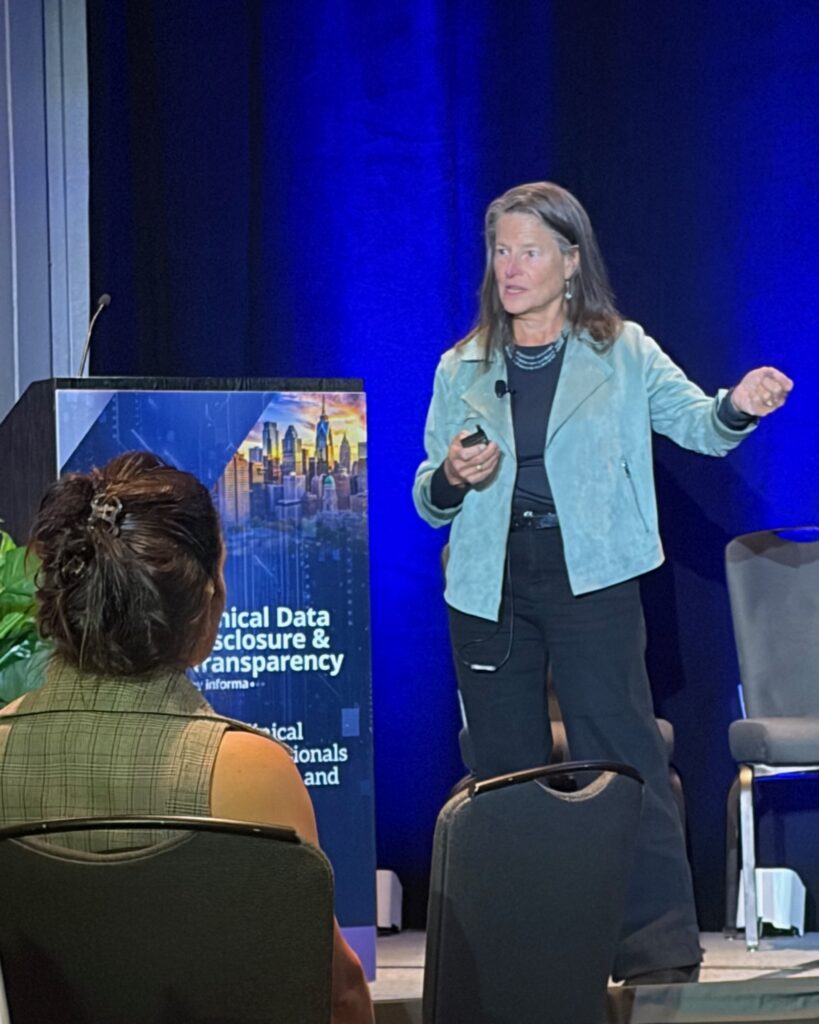
September 10: Barbara Bierer presented “Return of Results to Participants – Regulatory Momentum and What’s Next” at the Clinical Data Disclosure & Transparency conference in Philadelphia, PA.
September 14: Meeting of the Research, Development, and Regulatory Roundtable (R3) Topic: “Operation TrialBlazer.” R3 meetings are open to sponsors of the Research, Development, and Regulatory Roundtable (R3). For more information about this ongoing forum and how to join, click here.
September 15: TRACE Bioethics Forum, hosted by Kenya, and open not only to TRACE Project collaborators but also to researchers interested in African ethics and regulatory systems. Topic: Review and oversight of Controlled Human Infection Model (CHIM) studies.
September 15: Sylvia Baedorf Kassis participated in a panel, “Returning Clinical Trial Data to Patients: From Data Return to Data Understanding,” at the SCDM 2026 Annual Conference in Raleigh, NC.
September 16: Sylvia Baedorf Kassis presented “The Joint Task Force-Patient Partner Project (JTF-P3): Integrating Patient Partnership into Clinical Research Competencies” with Patient Partner co-leader, Linda Hunter, at a Trial Innovation Network Collaboration.
September 22: Advancing Childhood Cancer Platform Trials: C3PT Toolkit Launch (See Spotlight above)
September 22: Barbara Bierer participated in a panel to discuss Operation TrialBlazer at the NCATS CTSA Steering Committee meeting in Washington, D.C.
September 23: Implementing ICH E6(R3): Practical Risk-Proportionate Strategies for IRBs, Investigators, and Study Teams
September 24: Proportionate Oversight in Decentralized Trials: New Resources and Practical Tools (See Spotlight above)
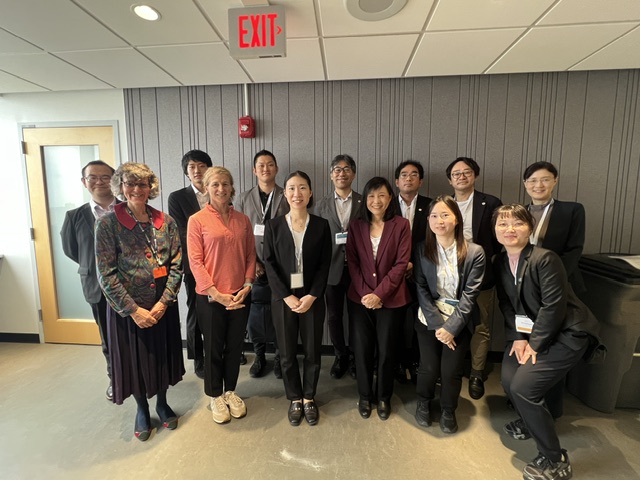
September 25: Sarah White and Carmen Aldinger, along with Rebecca Li of Vivli, hosted the 2026 Mansfield-PhRMA Research Scholars in Boston. Presentations related to the work of the MRCT Center and Vivli were provided to the scholars.
September 28: Barbara Bierer joined fellow panelists Jon Walsh (Co-Founder and Chief Scientific Officer, Unlearn) and Tala Fakhouri (Chief AI and Regulatory Strategy Officer, Parexel, previously Associate Director for Data Science and AI Policy at FDA/CDER) on a webinar hosted by Unlearn, “More Drugs, Faster: Can Clinical Development Keep Up?”
September 28: Barbara Bierer presented “IRB Strengthening and the Future of Research Oversight,” with Holly Fernandez Lynch (University of Pennsylvania) in a virtual PRIM&R webinar briefing. They discussed proposals to strengthen and reform the IRB system and the broader human subjects research oversight landscape, in addition to the impact of current federal initiatives on IRBs, research institutions, and the research ethics community.
September 30: Barbara Bierer presented at the Innovation Evidence Workshop in Basel, Switzerland (invitation only).
October 5, 10:00 AM – 12:30 PM: Meeting of the Bioethics Collaborative. Topic: “What’s Mine is Mine and What’s Yours is Yours: Data Ownership and Sovereignty.” For more information about the Bioethics Collaborative and how to join this ongoing forum, click here.
October 5-8: Sylvia Baedorf Kassis will present on returning individual results and data to participants at the Innovation Network Gathering in West Chester, PA.
October 15, 11:20 AM-12:20 PM: Sylvia Baedorf Kassis will present in the opening plenary session during the virtual IACRN 18th Annual Conference entitled “Transforming Clinical Research Through Patient Collaboration.”
October 21 – 22: MRCT Center 2026 Annual Symposium. In-person in Boston or hybrid. Join us for discussions and presentations on ethical, actionable, and practical solutions to today’s global clinical research challenges. (Please see Spotlight above)
October 26: Lisa Koppelman will join a pediatric-focused panel, “Advancing Pediatric Clinical Trials: Innovation, Regulation, and Operational Excellence,” at DIA Canada’s Annual Meeting in Ottawa.
October 27, 11:00 AM – 12:00 PM ET: Health Literacy Month webinar: Returning Summary Results to Participants: Lessons from the Research Community (See Spotlight above)
The MRCT Center provides a unique and trusting community to improve the integrity, safety, and rigor of global clinical trials. Join us in developing innovative solutions and aligned approaches to global clinical research.