

Biannual Meeting
Webinar
Presented on: June 16, 2026
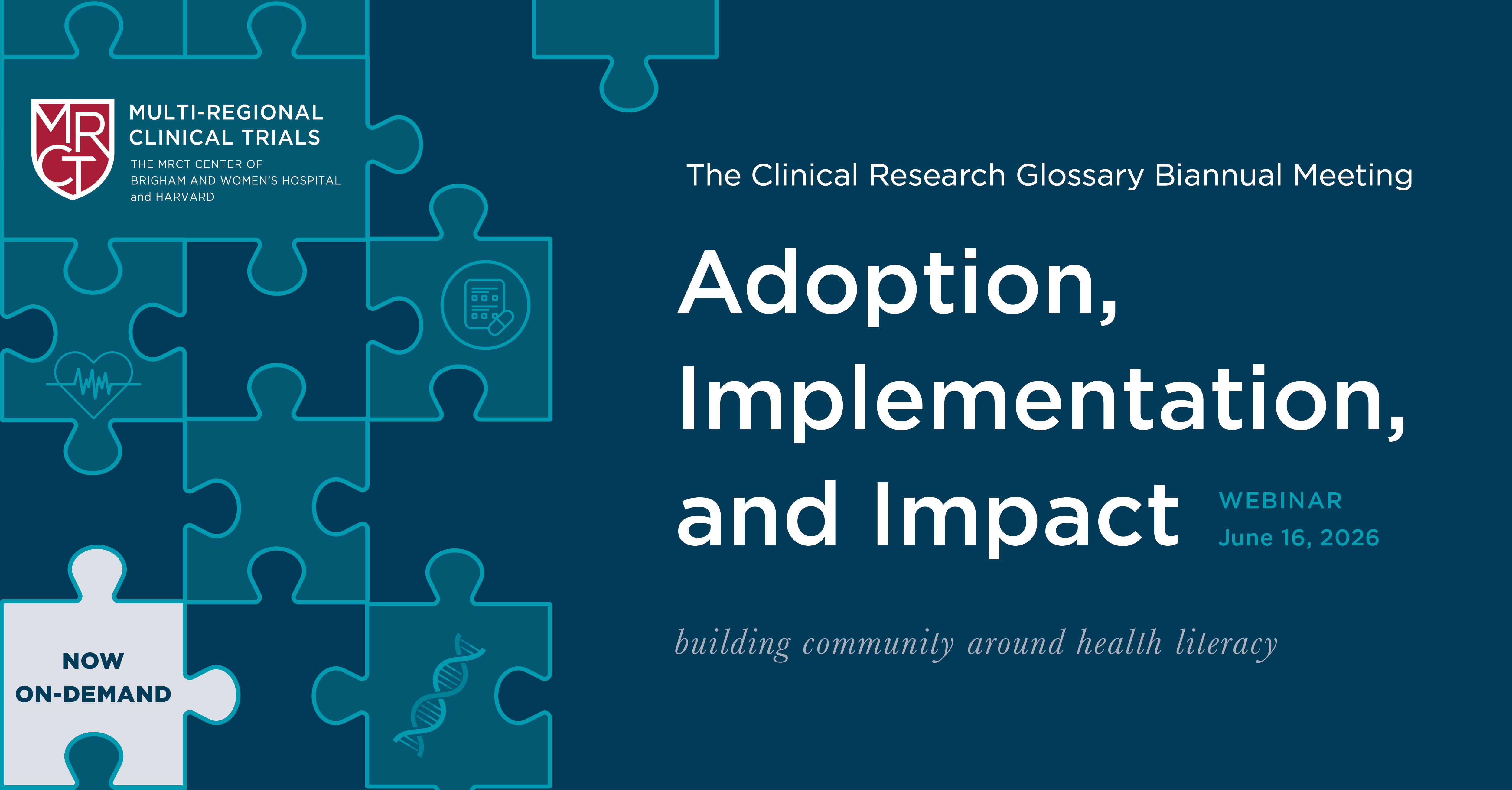
How do leading organizations turn plain language from an aspiration into everyday practice? In this June 2026 MRCT Center webinar, three users of the Clinical Research Glossary share how they put it to work, from global pharma to grassroots patient advocacy.
The Clinical Research Glossary is a free, publicly available resource that translates complex clinical research terms into clear, plain-language definitions. It empowers patients, participants, and the public to make informed decisions about their care and research participation. Developed by the MRCT Center with a diverse, multi-interest-holder workgroup, its definitions have been part of the CDISC global data standards since 2023.
This session highlights real-world adoption and impact, followed by a panel discussion and audience Q&A.
Speakers
- Anna Subrizi, Senior Director, Patient Empowerment, Bristol Myers Squibb. How the Glossary is embedded in BMS’s Universal Patient Language (UPL) program and used across teams for plain language summaries, informed consent forms, and patient materials.
- Sudipta Chakraborty, PhD, Head, Health Literacy & Plain Language Center of Excellence, Biogen. How the Glossary became the exclusive reference for Biogen’s Plain Language Glossary 2.0 and anchors a cross-functional content reuse initiative.
- R. Bernard Coley, Co-Chair, Special Interest Group – Black Diaspora; Care Partner and Research Advocate; recipient of the 2026 World Parkinson Coalition Robin A. Elliott Community Service Award. How the Glossary supports community education, including the Black Parkinson’s Disease Summit.
Moderator: Sylvia Baedorf Kassis, Program Director, MRCT Center
What’s covered
- The MRCT Center and its ongoing commitment to health literacy
- The Clinical Research Glossary and the collaboration with CDISC
- The 2026 public review (June 12 to July 13): 27 definitions up for review, 24 new and 3 updated
- Enterprise use cases from Bristol Myers Squibb and Biogen
- Community and advocacy use cases in Parkinson’s disease education
- Panel discussion and audience questions
Related Resources
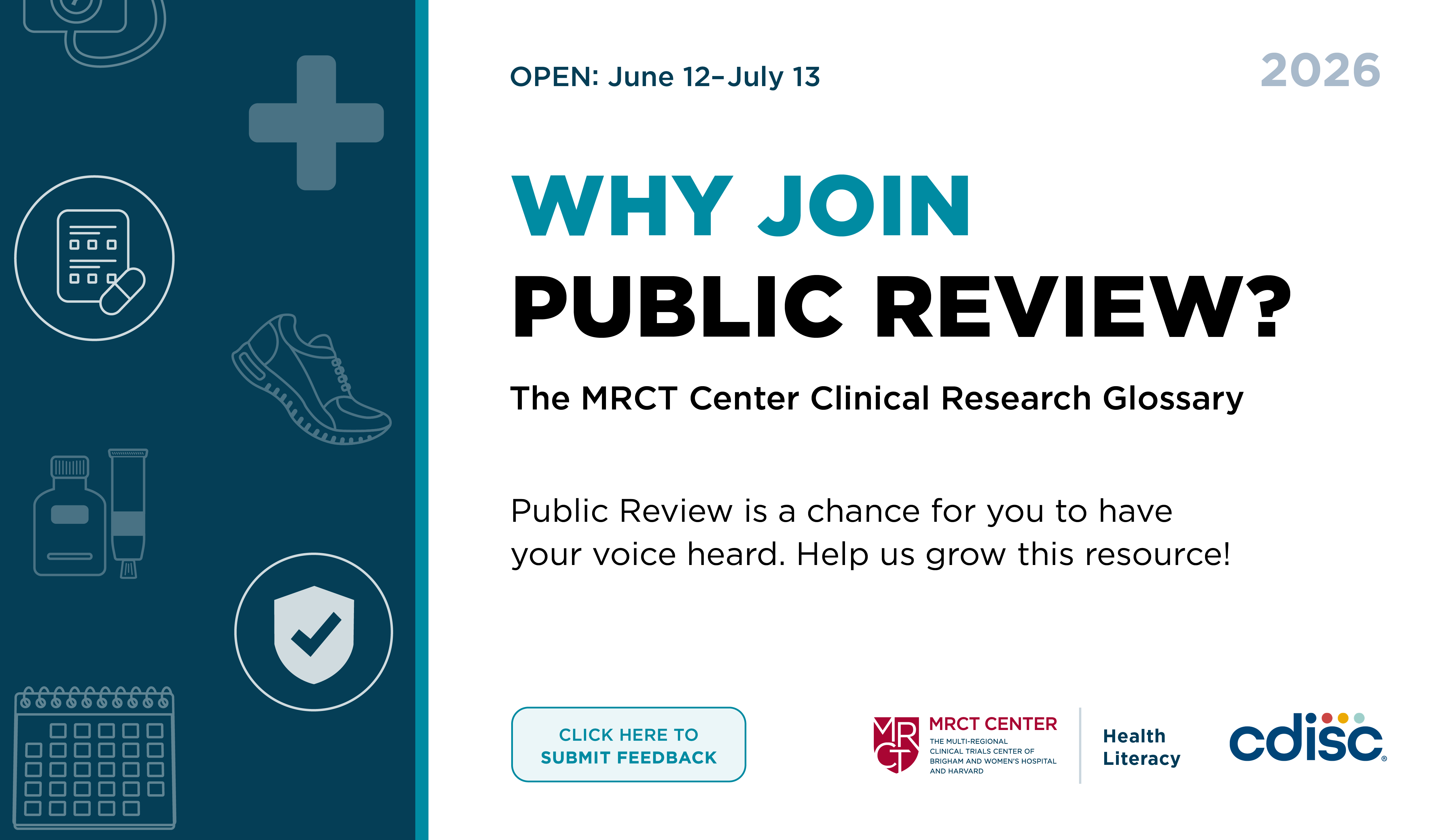
Public Review is a Critical Part of the Clinical Research Glossary process.
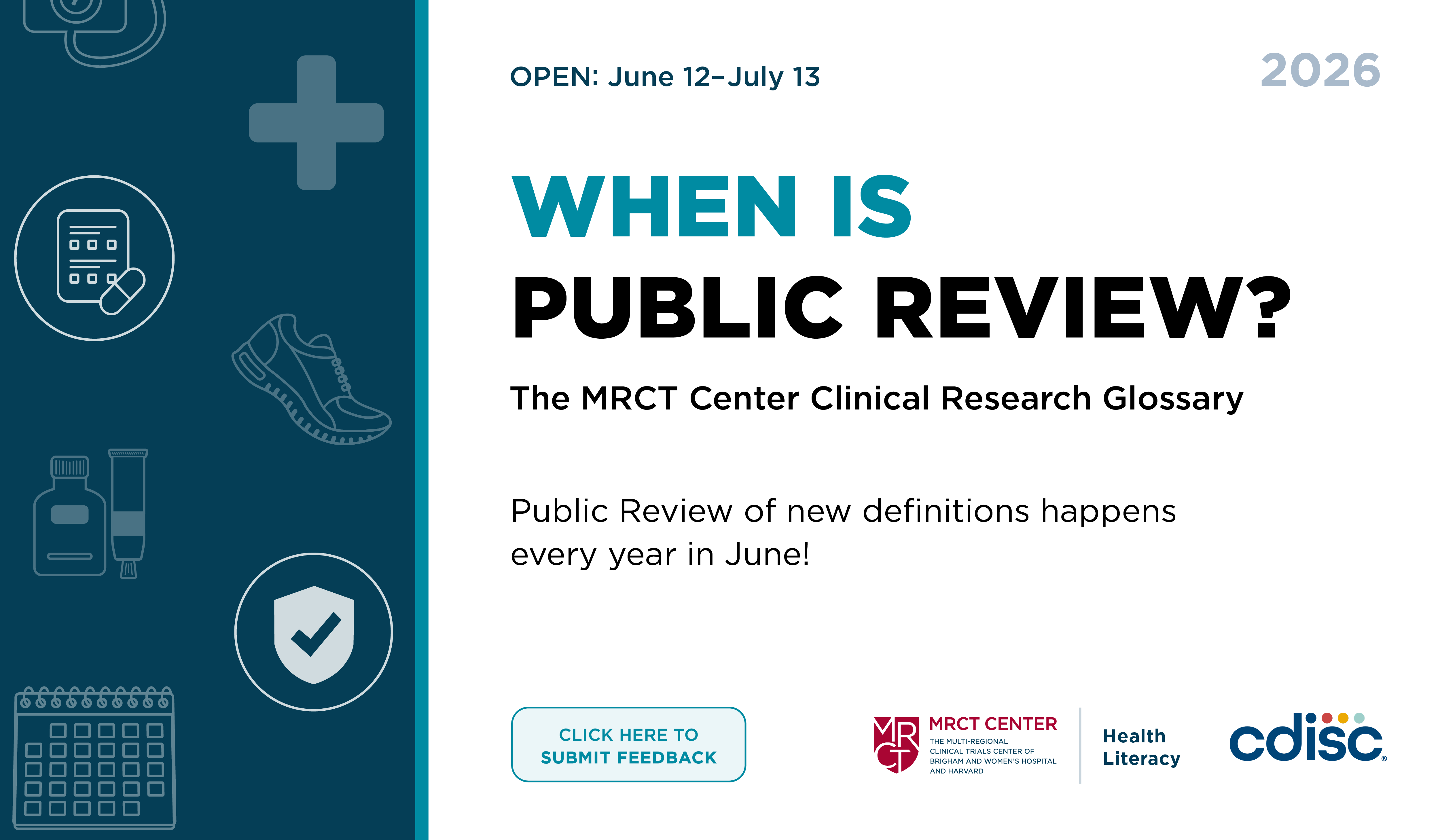
Part of being a CDISC global plain language standard means all new terms and definitions, plus change requests we received throughout the year, go through a public review process.
Public Review of the Clinical Research Glossary happens every June. Public Review is now open: June 12 – July 13, 2026
After definitions are developed by the Clinical Research Glossary team, Public Review ensures the definitions get an extra review by people who were not involved in the project. This helps us be more confident that the definitions are clear and easy to understand.
Help us spread the word about Public Review! Click here for the Media Kit.
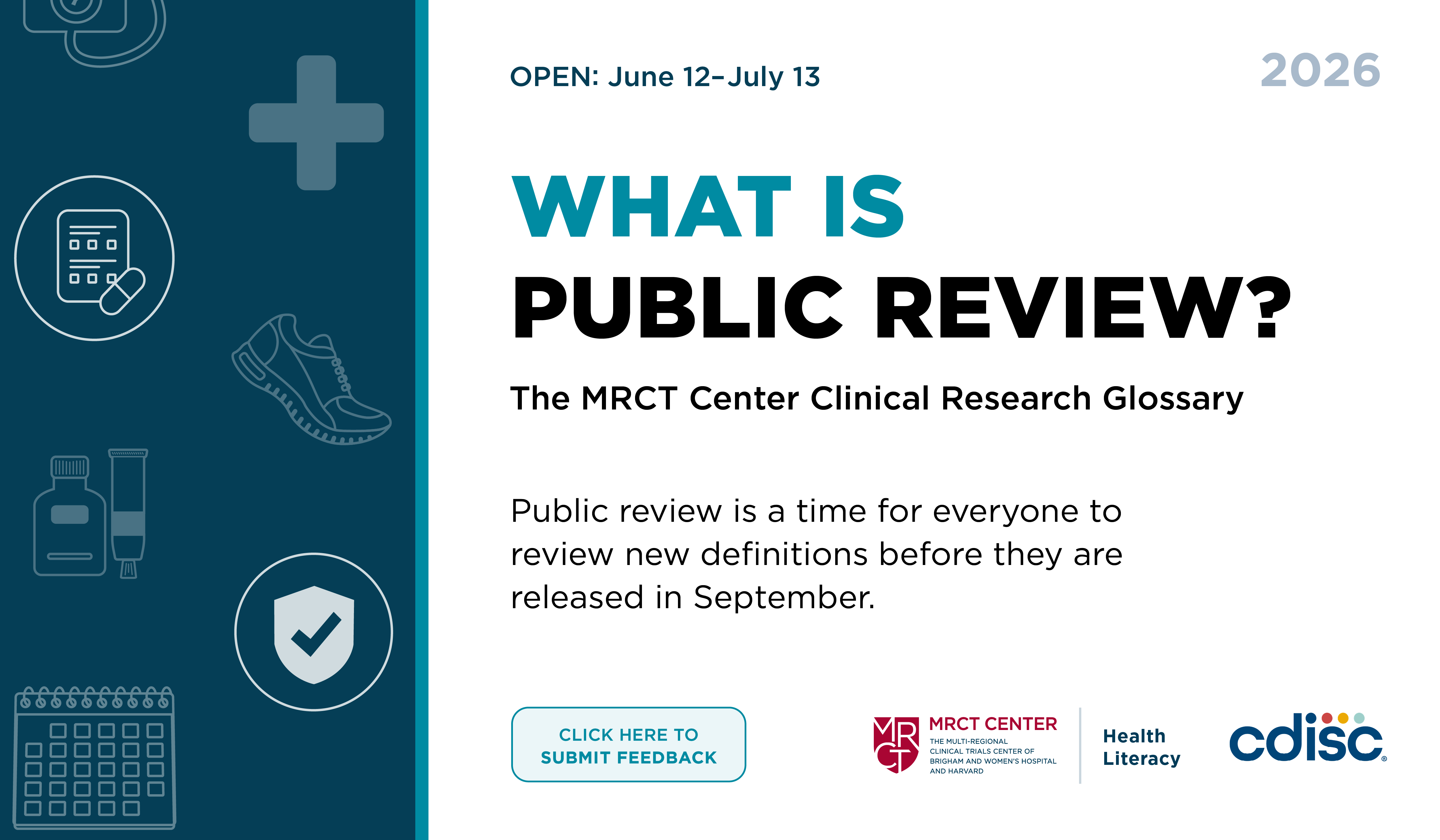
Send us your feedback using the MRCT Center Public Review process.
- The MRCT Center’s process uses a simple survey to collect feedback.
- This process will not require reviewers to create an account, but we do ask for name, organization and email address. Collecting this information allows us to validate the entry and follow-up with each person to let them know how the comment was addressed.
- You can send us feedback on already posted definitions all year round and suggest new words for us to consider whenever you want. Click here to contact us.
The CDISC Public Review process is also an option if you know how to use JIRA
- CDISC’s Public Review process uses Wiki JIRA.
- This works great if you already have a CDISC login and are familiar with the process. Individuals will need to create accounts to provide comments via JIRA.

CDISC has kindly provided video instructions here.
Baedorf Kassis S, White S, & Bierer B. (2022). Developing a consensus-driven, plain-language clinical research glossary for study participants and the clinical research community. Journal of Clinical and Translational Science, 1-20. doi:10.1017/cts.2022.12
Follow the MRCT Center on LinkedIn
Implementing the Clinical Research Glossary: How to Attribute the MRCT Center