Publication:Therapeutic Innovation and Regulatory Science
Date Published: June 18, 2026
Description: “Expertise of European Clinical Trial Units in Conducting and Managing Cross-Border Pediatric Clinical Trials for Rare Diseases,” published in Therapeutic Innovation & Regulatory Science and led by Begonya Nafria of the Institut de Recerca Sant Joan de Déu with co-author Barbara Bierer, surveyed 43 clinical trial units across 17 European countries on their experience managing international participants in pediatric trials for rare diseases. Those units had received patients from 81 different countries, and the good practice they reported most often was providing written and verbal translation of informed consent documents, patient-reported outcome measures, and quality of life scales when these were not available in a family’s native language. The authors also documented 20 cases of discrimination, most stemming from language requirements written into eligibility criteria, and conclude that routine translation, professional interpretation, and dedicated support structures are needed for equitable access regardless of a child’s native language or nationality.
Publication:Therapeutic Innovation and Regulatory Science
Date Published: June 10, 2026
Description: Participants are rarely informed of the possibility that a trial may stop early. Here, Nora Hutchinson, Luke Gelinas, and Barbara Bierer argue that disclosure during the informed consent process would support participant decision-making, temper concerns if termination does occur, and promote transparency and trust in the research enterprise.
Publication:Therapeutic Innovation and Regulatory Science
Date Published: March 18, 2026
Description: “Parents’ Perspectives on Access to Pediatric Rare Disease Cross-Border Clinical Trials in Europe: Experiences of Language Inclusion and Preferences,” published in Therapeutic Innovation & Regulatory Science and led by Begonya Nafria of the Institut de Recerca Sant Joan de Déu with co-author Barbara Bierer, surveyed parents of children living with a disease about access to cross-border trials in Europe. Of 1,436 responses, 10% of families had participated in a clinical trial, and 30.1% of those had traveled abroad to do so. Among parents whose children were excluded from cross-border trials, roughly one-third cited language or country barriers as the reason.
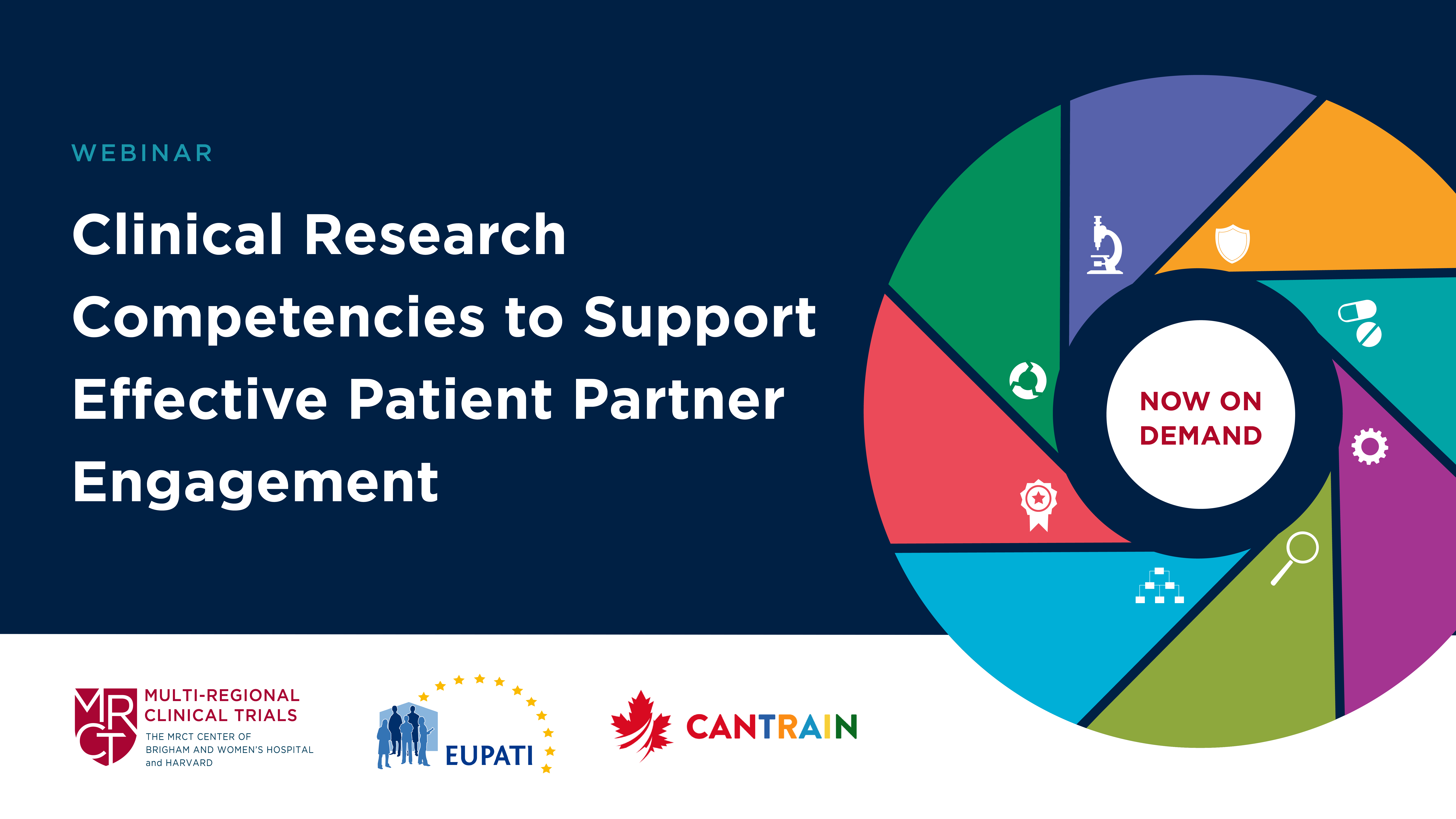
Join the MRCT Center, CANTRAIN, and EUPATI to learn the results of an effort to integrate patient partnership into the existing Joint Task Force (JTF) Framework for Clinical Trial Competency.
The initiative, entitled “JTF-Patient Partner Project (P3) – Co-Creating Clinical Research Competencies to Support Effective Patient Partner Engagement Activities,” united a representative group of patient and caregiver partners, academic researchers and study staff, industry representatives, and others, to imagine what patient partnership within the JTF Framework would cover and include.
The updates proposed in JTF-P3 include a supplementary addendum focused on integrating patient partners into the study team. The results provide a blueprint that is both operational and aspirational, supporting more skilled, inclusive, and equitable clinical research teams to achieve results faster through more responsive and impactful trials.
By the end of this webinar, attendees should be able to:
Explain what patient partners and partnerships are, and why patient partner inclusion within study teams is so important
Explain the JTF-P3 process
Describe the JTF-P3 updates to the original JTF Framework
Identify next steps in the process of meaningful patient partner integration into study teams
This webinar will be offered twice, with the same content presented by different regional panelists. One registration and one Zoom link cover both sessions. Register once and join whichever session best fits your schedule.
Session A — May 7, 9:00 AM – 10:00 AM EDT (Boston/Ottawa); 3:00 PM – 4:00 PM CEST/SAST (Brussels/Cape Town); 6:30 PM – 7:30 PM IST (New Delhi)
Session B — May 7/8 8:00 PM – 9:00 PM EDT (Boston/Ottawa); 9:00 AM – 10:00 AM JST (Tokyo, May 8); 10:00 AM – 11:00 AM AEST (Melbourne, May 8)
The MRCT Center Clinical Research Glossary is more than a reference—it’s a tool for clarity, connection, and accessibility across the clinical research ecosystem. Organizations from patient advocacy groups to health systems, academic journals, and recruitment platforms are integrating the glossary to meet the distinct needs of their audiences.
Whether embedded in health literacy trainings, linked within patient education portals, or aligned with technical terminology in scholarly publications, these five implementation stories demonstrate the glossary’s real-world utility in empowering patients, caregivers, professionals, and the public to engage with research using a shared, plain language vocabulary.
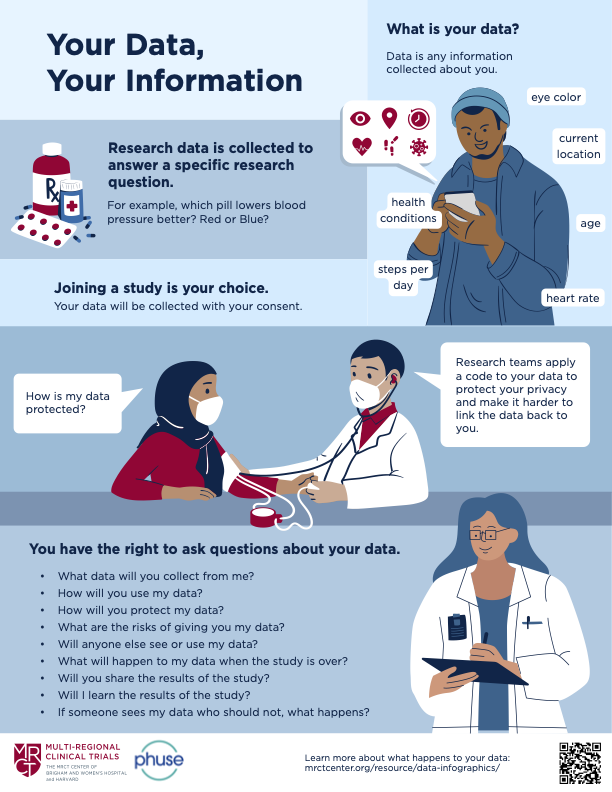
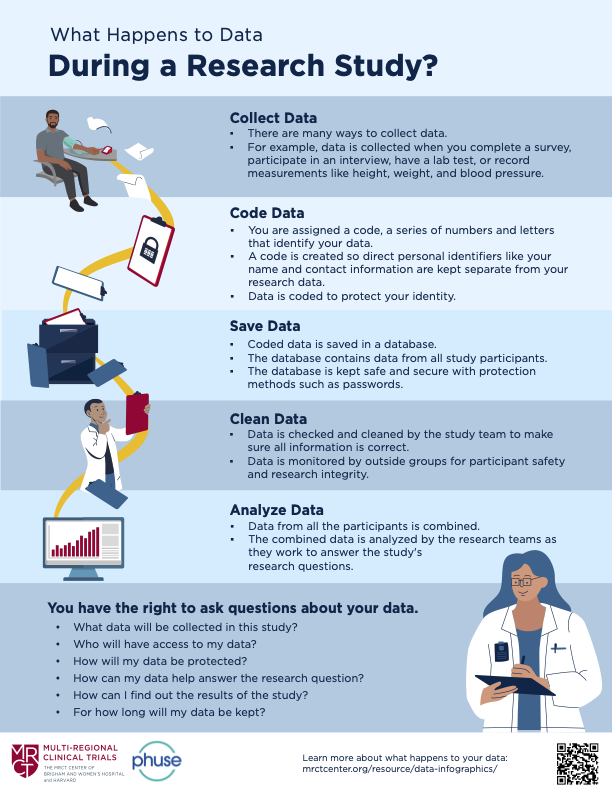
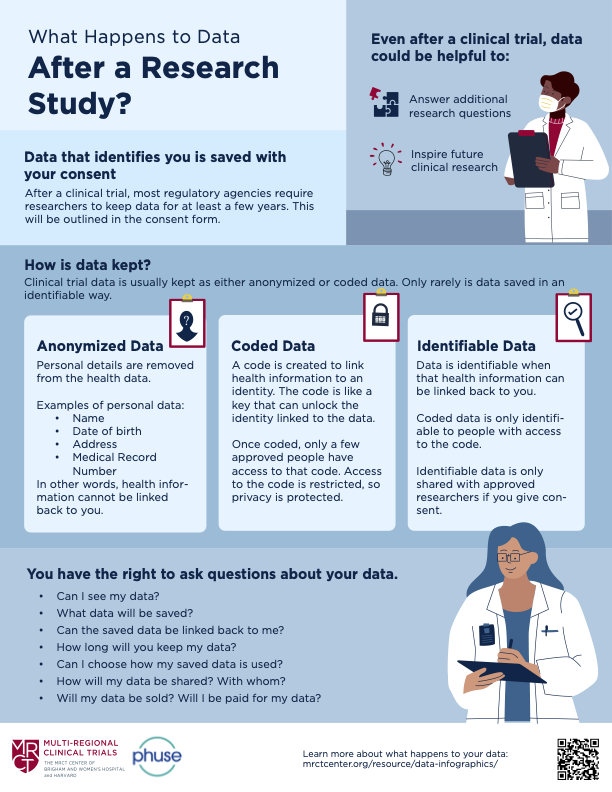
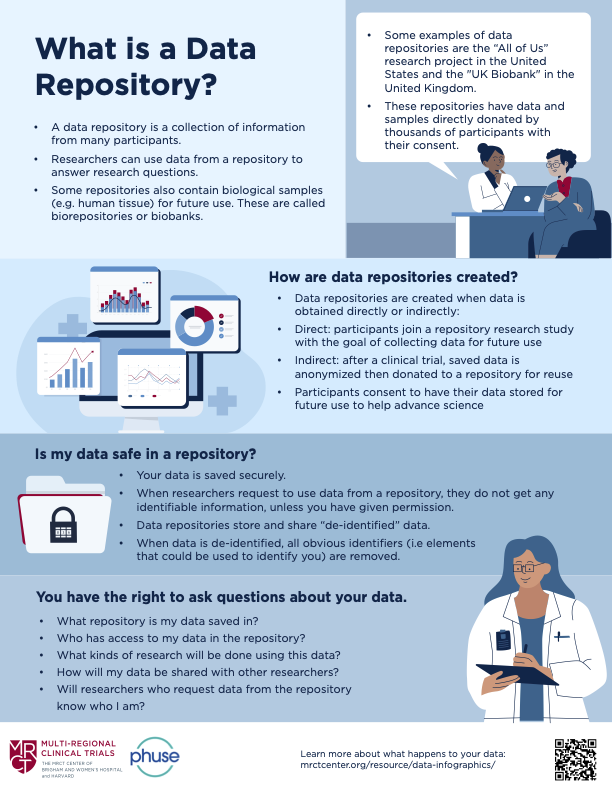
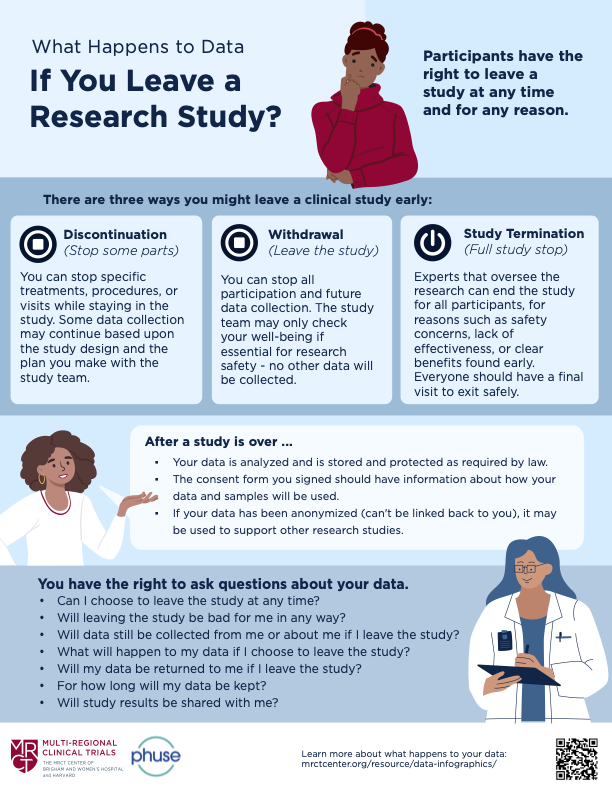
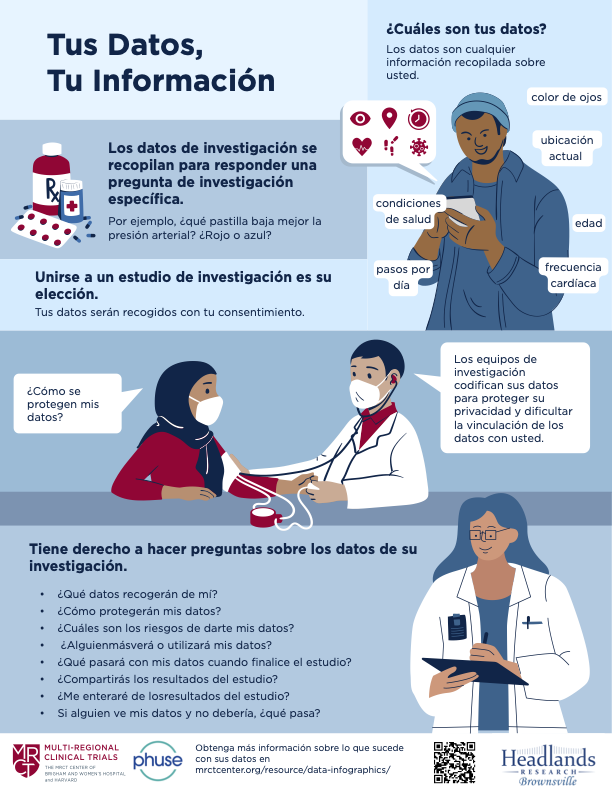
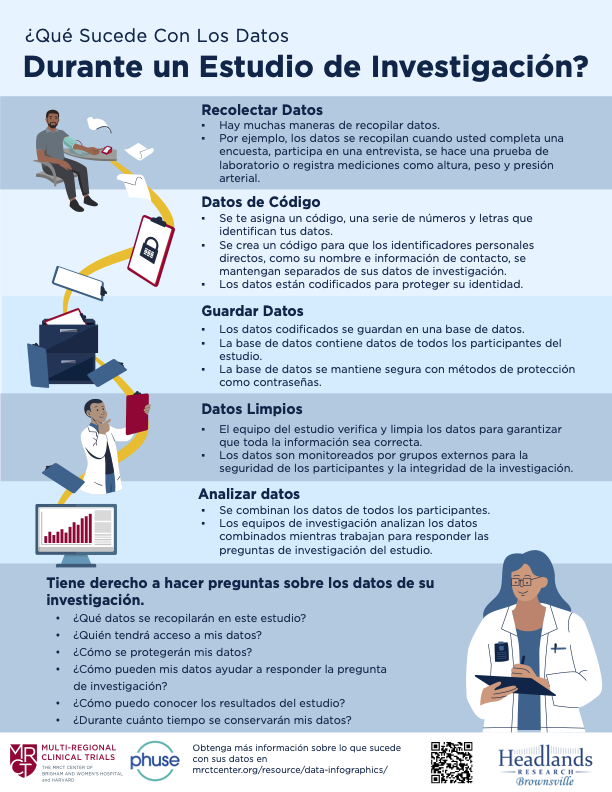
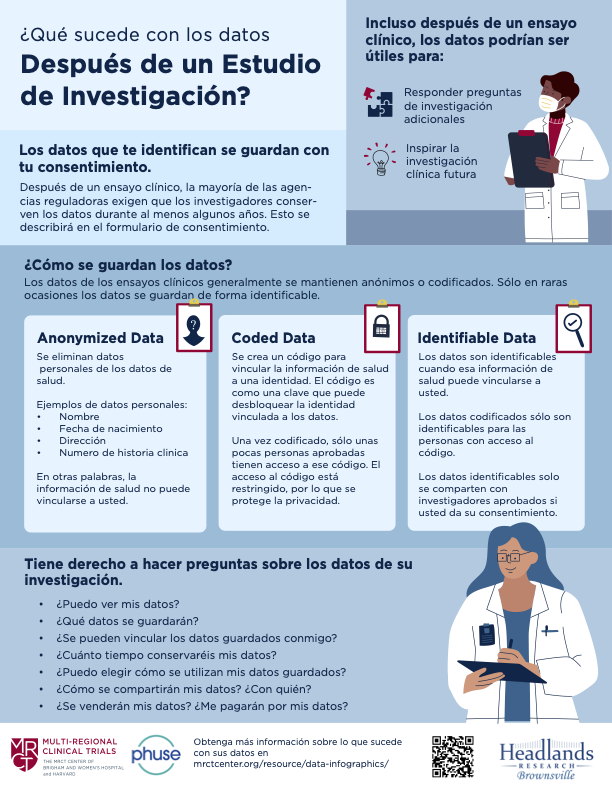
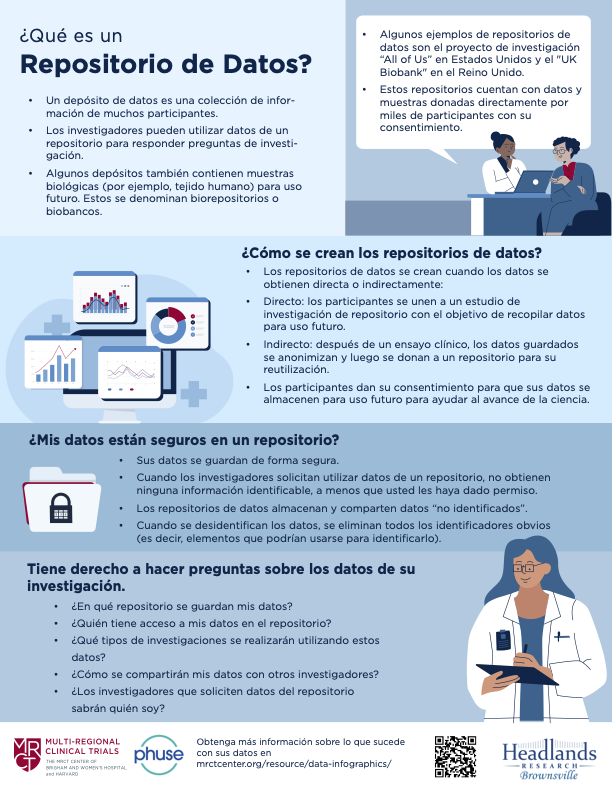
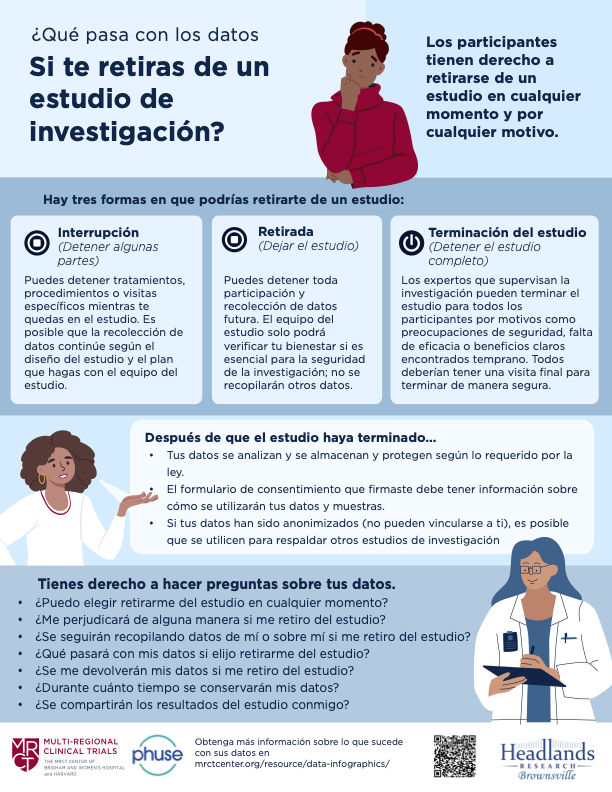
The MRCT Center is pleased to collaborate with the PHUSE Data Transparency team on materials to educate the general public on Data Privacy and Data Sharing. These materials were presented at a webinar on April 3, 2025. The recording and slides are now available on-demand here.
These infographics and videos are freely available and designed to explain how data is used and protected in clinical research.
Developed by: MRCT Center Health Literacy Workgroup
Thank you to Dr. Farah Asif and colleagues at the Shaukat Khanum Memorial Cancer Hospital And Research Centre, Lahore, Pakistan for helping us translate, adapt text, and provide these flyers in Urdu.
Developed by: MRCT Center Health Literacy Workgroup
Thank you to Dr. Farah Asif and colleagues at the Shaukat Khanum Memorial Cancer Hospital And Research Centre, Lahore, Pakistan for helping us translate, adapt text, and provide these flyers in Urdu.
Developed by: MRCT Center Health Literacy Workgroup
Thank you to Dr. Farah Asif and colleagues at the Shaukat Khanum Memorial Cancer Hospital and Research Centre, Lahore, Pakistan for helping us translate, adapt text, and provide these flyers in Urdu.
Developed by: MRCT Center Health Literacy Workgroup
Thank you to Dr. Farah Asif and colleagues at the Shaukat Khanum Memorial Cancer Hospital And Research Centre, Lahore, Pakistan for helping us translate, adapt text, and provide these flyers in Urdu.