

In the Spotlight
MRCT Center to Co-Host NIH Webinar on Sharing Aggregate Study Results with Participants
April 27, 1:00–2:30 PM ET
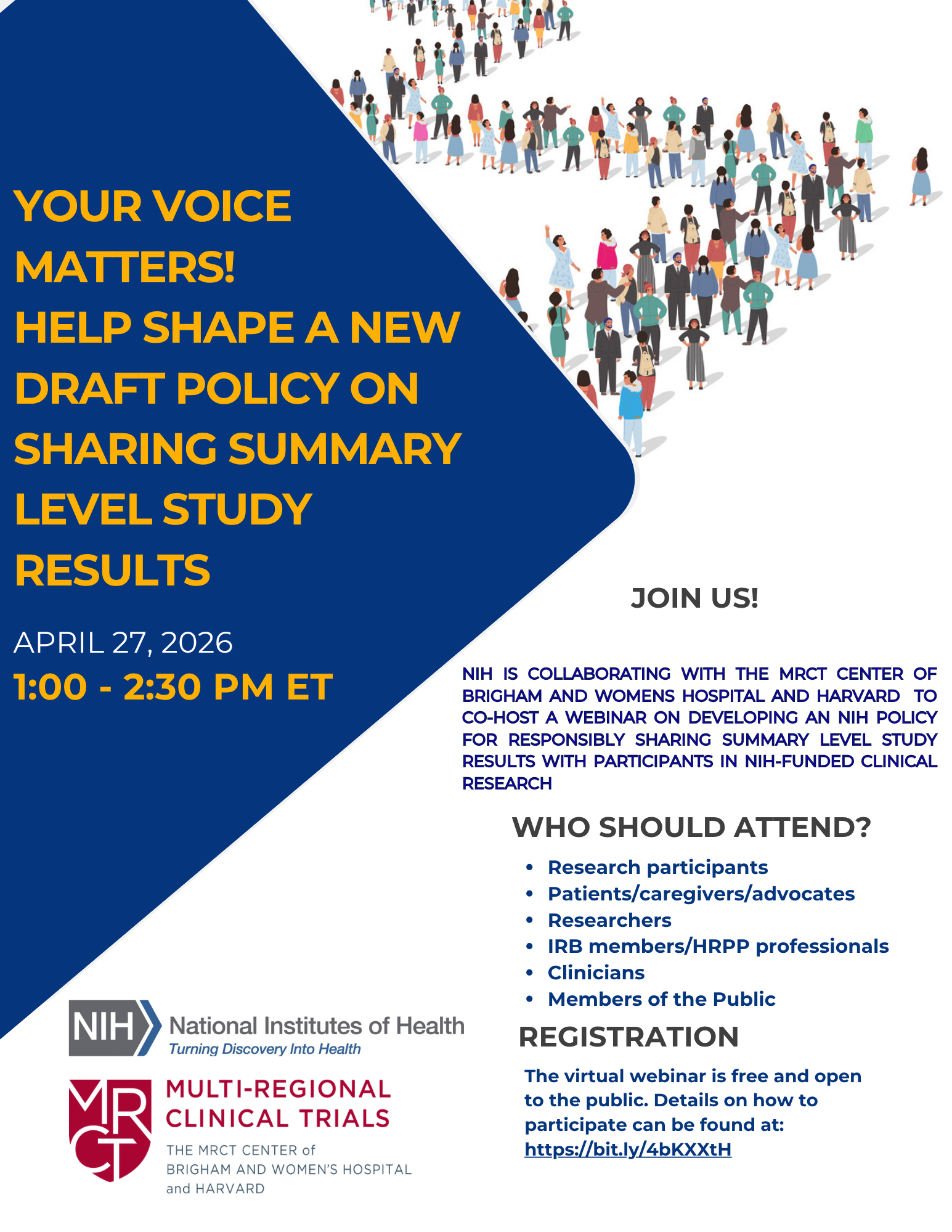
For nearly a decade, the MRCT Center has been advancing the principle that research participants deserve to know what was learned from their participation. That work, spanning guidance documents, toolkits, and sustained stakeholder engagement, is actively expanding in 2026, as NIH takes the next step: developing an NIH policy.
On April 27, the MRCT Center will join the National Institutes of Health to co-host “Your Voice Matters: Help Shape a New NIH Policy on Summary Level Study Results,” a public webinar and listening session on the responsible return of summary-level study results to research participants. The session is part of NIH’s formal policy development process to establish requirements for researchers and institutions to share plain-language study findings with the participants who made those studies possible.
Lyric Jorgenson, PhD, NIH Associate Director for Science Policy, will deliver opening remarks and outline the goals of the session. MRCT Center Faculty Director Barbara Bierer will then present on the current landscape and best practices for returning summary-level results to participants, drawing on the MRCT Center’s years of work with sponsors, academic investigators, and patient communities. Much of the session will be devoted to oral comments from stakeholders, with NIH particularly seeking input on what to include in results summaries shared with participants, how to share them accessibly and equitably, and when in the research timeline sharing should occur.
The webinar is free and open to the public. The target audience includes clinical researchers, research participants, patient advocates, IRB and HRPP professionals, clinicians, and caregivers. Anyone with a stake in making the responsible return of research results standard practice is encouraged to attend and participate.
Now On-Demand: Deploying Digital Twins and Synthetic Data in Evidence Generation
The third webinar in the MRCT Center’s ongoing Digital Twins and Synthetic Data series, presented on March 19, examined the use of digital twins and synthetic data in evidence generation, focusing on their emerging applications across the clinical trial lifecycle, regulatory expectations, and the role of evidence quality, validation, and model interpretability in shaping adoption. The session featured Daniele Bertolini (Machine Learning Scientist, Unlearn.ai), Tala Fakhouri (Vice President, Consulting, AI & Digital Policy, Real-World Research, Parexel), and Karen Smith (Board Director; Context Therapeutics, Skye Bioscience, and Sangamo Therapeutics), moderated by Barbara Bierer.
The recording, slides, and related resources are now available on demand here.
Earlier webinars in this series are also available on demand:
Clinical Research Glossary: A Resource in Active Use Around the World
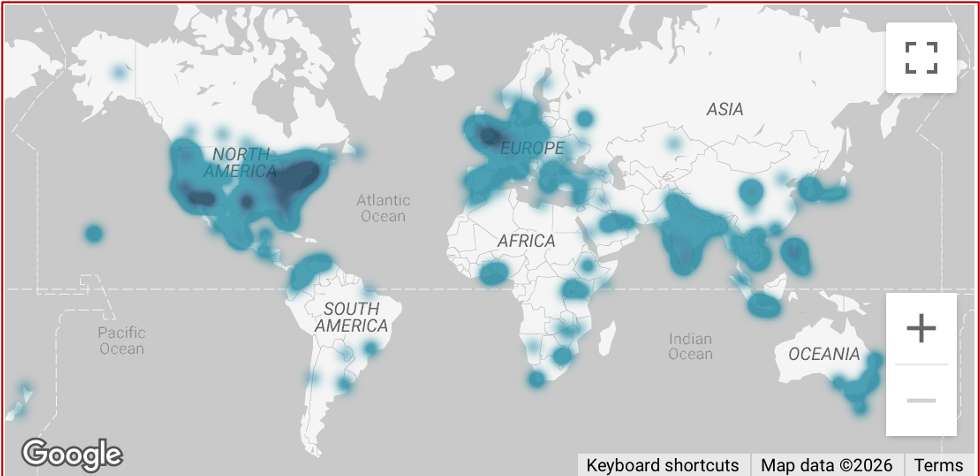
The MRCT Center’s Clinical Research Glossary is actively used by researchers, study participants, patient advocates, and clinical research professionals around the world. The Glossary currently offers 216 plain-language definitions of clinical research terms, freely available online and downloadable in PDF and Excel formats, with translation support in 50 languages via the website. Since 2023, the Glossary has been a CDISC global standard for plain-language clinical research terminology.
Every definition is co-developed through an active workgroup of more than 50 volunteers, including patient and caregiver advocates, medical writers, health literacy experts, and professionals from organizations including AstraZeneca, Biogen, Eli Lilly, Merck, Pfizer, AbbVie, Boehringer Ingelheim, and CDISC. In recent years, the workgroup has been co-led with the MRCT Center by patient advocates Marilyn Neault and Desiree A.H. Walker. Meet the team.
This June, ~20 new terms will enter Public Review, the annual 30-day period during which proposed definitions are reviewed by external users before being finalized and released each September. Public Review is a required step in the CDISC Standards Development Process. Sign up to be notified when Public Review opens.
Organizations including Bristol Myers Squibb, HonorHealth, Biogen, Pfizer, MGB Rally, and TriCan Health are using the Glossary in patient education portals, health literacy trainings, and participant-facing materials. View use case examples.Explore the Glossary
Events & Presentations
January 9: Following the WCG webinar “Beyond the Trial: Ethical Oversight in Gene Therapy Long-Term Follow-Up,” WCG published a compiled Q&A featuring responses from Carolyn Riley Chapman and fellow panelists on regulatory strategy, IRB considerations, and evolving risk assessment in gene therapy long-term follow-up studies. The MRCT Center’s Toolkit for Supporting the Design, Conduct, and Reporting of Long-Term Follow-Up Studies, released in January, is comprehensive and provides background information, practical resources, and recommendations to support best practices for LTFU studies for both investigational and approved gene therapies, balancing the generation of critical long-term safety and efficacy data with the need to reduce burdens placed on participants, caregivers, sponsors, and investigators.
March 3: Sylvia Baedorf Kassis co-led a workshop at DIA-MASC in Boston, MA, on practical strategies for medical writers to create patient-centric materials, navigate legal and regulatory challenges, and advocate for health literacy-focused processes.
March 4: Barbara Bierer joined a virtual panel of expert speakers at the 11th annual Research Ethics Day conference: The Future of Research Ethics: Threats and Opportunities, hosted by the University of Minnesota’s Consortium on Law and Values.
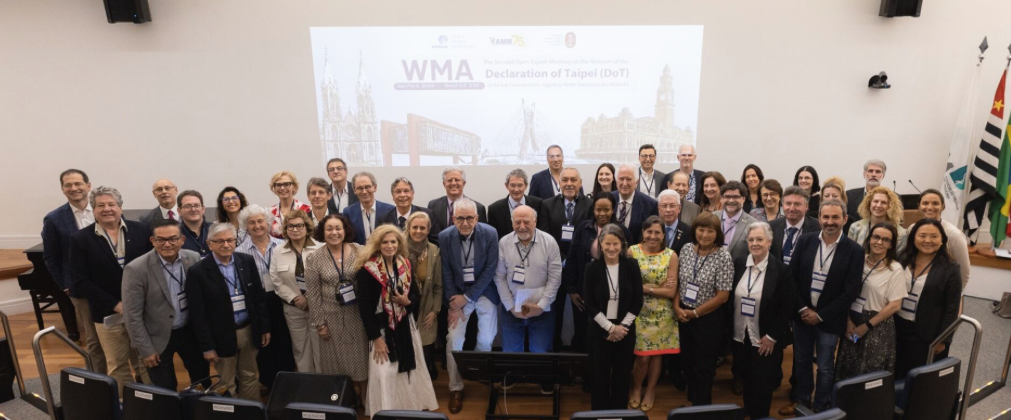
March 4-7: Barbara Bierer attended the second open expert meeting on the Revision of the Declaration of Taipei (DoT) that was held in São Paulo, Brazil. The DoT focuses on ethical considerations regarding the research use of health data repositories and biobanks.
March 19: Deploying Digital Twins and Synthetic Data in Evidence Generation. This webinar, the third in the ongoing webinar series focused on AI digital twins and synthetic data, is now available on demand here.
March 22-26: Sylvia Baedorf Kassis was a featured speaker and panelist at PHUSE Connect 2026 in Austin, TX, and presented on strategic approaches to involving patients and participants in the data sciences, the return of individual and study summary results, and public trust in research.
March 31: Inaugural meeting of the TRACE Bioethics Forum, a quarterly series for National Research Ethics Committees (NRECs), IRBs, and regulators, was co-led by the MRCT Center and the TRACE Project. This session, led by CIIC-HIN and the team from Rwanda, focused on Ethical Considerations in the 2024 Rwanda Marburg Outbreak Response.
April 7: The MRCT Center and Vivli co-host an ongoing, invitation-only forum focused on the European Health Data Space (EHDS). This forum will continue efforts to guide policy development toward a harmonized data-sharing system for secondary use.
April: Willyanne DeCormier Plosky will present at a plenary session for the AMA 2026 National Consortium Convening with M. Chase Cates, Alamo Area Resource Center.
April 14-15: Barbara Bierer will participate in the first meeting of the WHO Technical Advisory Group on Clinical Research Ecosystem Strengthening, in Geneva, Switzerland.
April 25, 9 am – 10:15 am ET: Barbara Bierer will join co-panelists Morgan Hanger (CTTI), Kevin Bugin (Amgen), Jennifer Byrne (PMG Research), Allison Cuff Shimooka (TransCelerate) to present “Embrace the Now, Ignite What’s Next” at ACRP 2026 in Orlando, FL.
April 27, 10:10 – 11 am ET: Barbara Bierer will present the keynote opening lecture at the conference entitled, “THREE I’s: and RESEARCH INTEGRITY™: COMPLIANCE, ETHICS and BIOSECURITY … Building Resilience” hosted by the Maine Regulatory Training and Ethics Center (MeRTEC), the New England Society for Biomedical Research, and North Carolina Association for Biomedical Research.
April 27, 1:00 pm – 2:30 pm ET: MRCT Center to Co-Host NIH Webinar on Sharing Study Results with Participants. “Your Voice Matters: Help Shape a New NIH Policy on Summary Level Study Results.” See Spotlight above.
April 29: Willyanne DeCormier Plosky will join Behtash Bahador (CISCRP) and others in a panel discussion, “The Democratization of Discovery: AI as an Equalizer in Clinical Trials,” at Innovating With Integrity: The Future of AI in Healthcare, an event hosted by AtlanticLIVE in Boston, MA.
May 5: Meeting of the Research, Development, and Regulatory Roundtable (R3). Topic: Use of AI in Clinical Trials – Exploration of Key Legal and Regulatory Issues – Part 1. This meeting is open to sponsors of the Research, Development, and Regulatory Roundtable (R3). For more information about this ongoing forum and how to join, click here.
June 1-4: Sarah White and Willyanne DeCormier Plosky will be attending TRACE Project in-person meetings in Harare, Zimbabwe, to review progress and chart the path forward. The TRACE Project (Trial Regulation and Clinical Ethics Optimization) is a multi-country initiative launched in 2025 to strengthen and harmonize clinical trial ethics and regulatory oversight across African countries, beginning with Nigeria, Rwanda, Tanzania, Zimbabwe, and Kenya. The MRCT Center, a core TRACE partner, is leading the capacity building, ethics committee registration and accreditation, ethics reliance frameworks, and sustainable financing mechanisms for NECs and IRB workstreams.
June 4: Meeting of the Bioethics Collaborative. Topic: Digital Doppelgängers: Ethics of Digital Twins and Synthetic Data. For more information about the Bioethics Collaborative and how to join this ongoing forum, click here.
June 8: Meeting of the Research, Development, and Regulatory Roundtable (R3). Topics: Use of AI in Clinical Trials – Exploration of Key Legal and Regulatory Issues – Part 2. This meeting is open to sponsors of the Research, Development, and Regulatory Roundtable (R3). For more information about this ongoing forum and how to join, click here.
June 11: Sarah White will join MRCT Center Executive or Steering Committee representatives Benjamin Rotz (Eli Lilly), Crispin Woolston (Sanofi), and Karla Childers (Johnson & Johnson) on a panel focused on Post Trial Continued Access at the 2026 World Orphan Drug Congress in Boston.
June 22, 9:00 am – 11:00 am ET: Join us for the Joint Task Force for Clinical Trial Competency (JTF) Biannual Global Meeting to hear about global perspectives on implementing the JTF Framework. Agenda specifics will be posted soon.
Publications
February 24: In “Disclosure of Pregnancy-Related Privacy Risks in Clinical Research Post-Dobbs,” published in NEJM Evidence, Barbara Bierer, Ava Glazier, and Willyanne DeCormier Plosky examine how routine clinical research practices — including pregnancy testing, contraception requirements, and incidental pregnancy reporting — have created new privacy risks for participants, clinicians, and investigators in the wake of the 2022 Dobbs v. Jackson Women’s Health Organization decision. The article offers practical guidance for investigators and IRBs navigating the shifting legal landscape created by that ruling.
March 12: In “Genetic Therapies for Rare Diseases: Developing Ethical Regulatory Policies,” a commentary published in the Hastings Bioethics Forum, Carolyn Riley Chapman, former lead of the MRCT Center’s Cell and Gene Therapies project, and co-author Nirvan Bhatia argue that the U.S. should adopt a differentiated approval system for gene-based therapies for rare diseases, conferring different tiers of regulatory approval based on different levels of evidence. The authors contend that this approach would improve patient access to innovative therapies while increasing transparency about evidentiary standards and providing stronger incentives for timely post-marketing studies. The MRCT Center’s Toolkit for Supporting the Design and Conduct of Long-Term Follow-Up Studies for Gene Therapies, released in January, offers practical guidance on related challenges in gene therapy research.
March 18: In “Parents’ Perspectives on Access to Pediatric Rare Disease Cross-Border Clinical Trials in Europe: Experiences of Language Inclusion and Preferences,” published in Therapeutic Innovation & Regulatory Science, Barbara Bierer and co-authors analyze findings from a survey of 1,436 parents across 34 European countries on their experiences with and preferences for cross-border clinical trial participation. Among families who reported being excluded from a trial abroad, 34.7% cited language barriers or country of residence as the reason. The authors conclude that language accommodation is feasible and should be incorporated into trial design, and that language should be used as an eligibility criterion only when scientifically justified.
March 27: Benjamin Silverman of Mass General Brigham, Barbara Bierer, and MRCT Center colleague Willyanne DeCormier Plosky, with co-authors, published Supported Decision-Making for Clinical Research Participants with Mental Illness in the Journal of Law, Medicine, and Ethics. Because mental illness can be dynamic and variable in nature, decision-making capacity presents nuanced challenges for research participation. The authors examine supported decision-making — a strategy that enables individuals to select trusted others to help them understand and communicate decisions — with particular attention to the implications for people with intermittent or episodic mental illness.
March 30: Mark Barnes, Faculty Co-Director of the MRCT Center and partner at Ropes & Gray, with co-authors, published International Ethical Principles for Banking and Secondary Research Use of Human Biospecimens and Associated Data: The Seattle Principles in the Journal of Law, Medicine & Ethics. International biospecimen sharing is essential to advancing science and developing therapies that benefit all populations — yet the field lacks a harmonized ethical and regulatory framework across jurisdictions. Drawing on extensive stakeholder engagement through forums including ISBER, PRIM&R, and the UN General Assembly Science Summit, the authors propose eleven foundational principles covering transparency, consent, privacy, community welfare, governance, and responsible stewardship of biospecimen resources, with the goal of establishing common ethical ground for the global research community.
The MRCT Center provides a unique and trusting community to improve the integrity, safety, and rigor of global clinical trials. Join us in our efforts to develop innovative solutions and aligned approaches to global clinical research.
Learn more about becoming an MRCT Center sponsor.